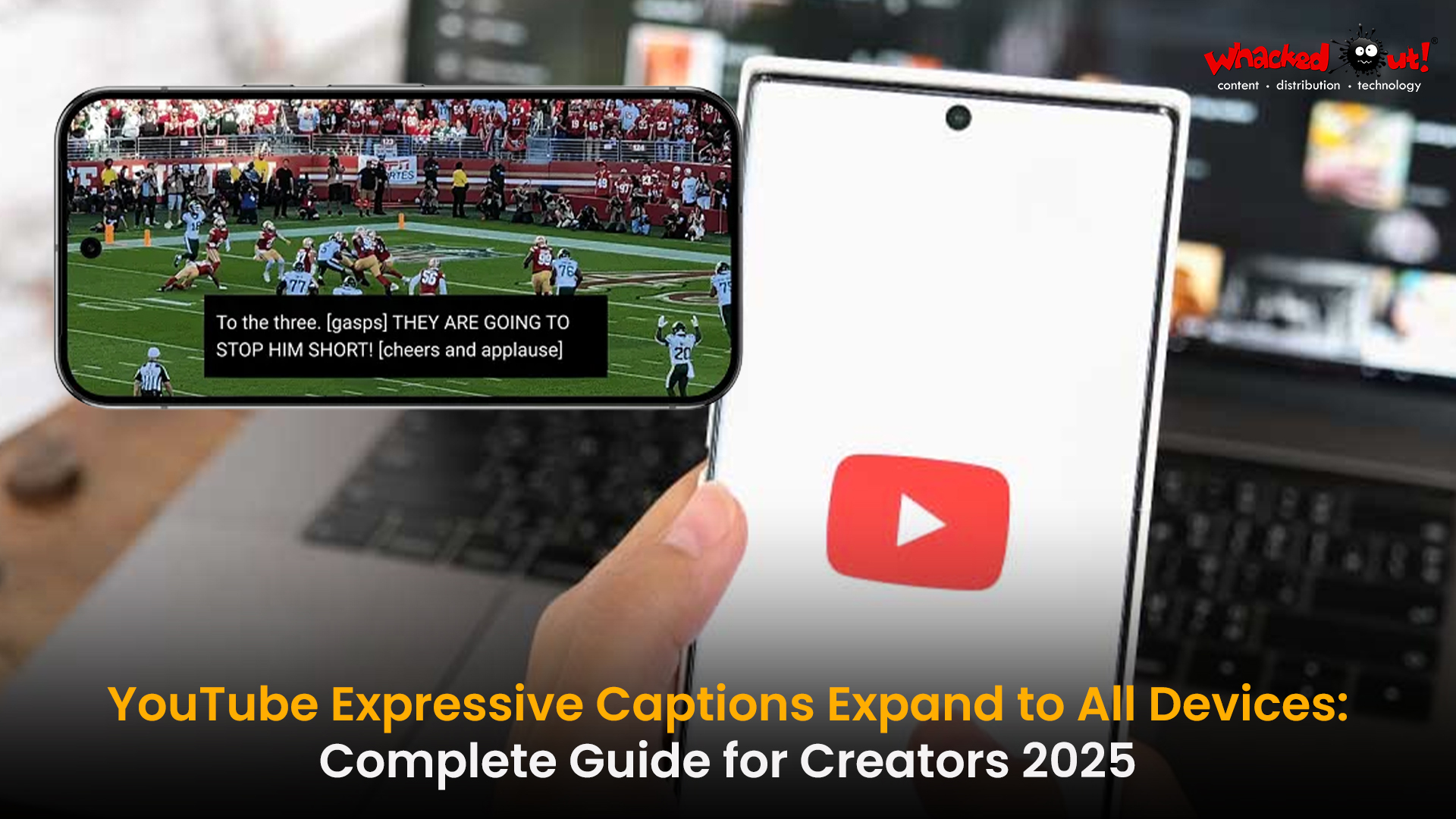
YouTube has officially expanded Expressive Captions across all devices including mobile, desktop, TVs, and game consoles as of December 2, 2025, transforming how viewers experience video content. This groundbreaking AI-powered feature, developed in collaboration with Google DeepMind, automatically enhances captions by detecting and displaying emotional tone, vocal intensity, and ambient sounds in real-time. Instead of plain text, viewers now see capitalized words to show excitement (like “HAPPY BIRTHDAY!”), labeled vocal bursts such as [gasps] or [sighs], and environmental cues like applause or laughter. The technology leverages advanced machine learning to analyze audio and translate emotional nuance into stylized captions, making videos more accessible and engaging for all viewers. Currently available for English-language videos uploaded after October 2025, with expansion to additional content and languages planned.
This expansion addresses critical accessibility needs for approximately 1.5 billion people worldwide with hearing loss and millions more who regularly use captions while viewing without sound. Expressive Captions move beyond traditional closed captions by providing deaf and hard-of-hearing viewers with complete emotional and contextual understanding previously lost in standard text-only captions. The feature benefits an even broader audience 70% of Gen Z frequently uses captions, and viewers across offices, public transportation, and homes benefit from enriched captions that provide missing audio context. For creators, expressive captions enhance engagement metrics, particularly for comedy, gaming, and reaction content where emotional delivery directly impacts audience reception and watch time performance. Research consistently demonstrates that videos with quality captions achieve higher retention rates and better completion percentages, making this feature valuable for both accessibility compliance and SEO optimization.
For content creators and digital marketers, Expressive Captions represent both an accessibility win and a growth opportunity. New uploads automatically receive enhanced captioning without extra effort, though creators focusing on specialized content or comedy benefit from human-reviewed captions for maximum accuracy. As accessibility features improve discoverability and engagement factors that influence YouTube’s recommendation algorithm creators should recognize that inclusive design is inseparable from platform success and visibility. While AI-driven emotion detection has limitations with sarcasm and subtle nuance, the feature complements rather than replaces professional captions. Google’s broader December 2025 accessibility push demonstrates that the company is embedding inclusion into core product design, making this expansion part of a larger industry trend where features designed for people with disabilities become essential tools for everyone.